Beginner Strength Exercises for Joint Support
Beginner Strength Exercises for Joint Support
Strengthening the muscles around your joints is one of the most effective ways to reduce pain, improve mobility, and prevent long‑term wear and tear. These beginner strength exercises for joint support are simple, safe, and designed for people who want to build stability without heavy weights or complicated routines.
If you’re exploring joint health, you may also find helpful guidance in the Physical Wellness Pillar.
🦵 Why Strength Exercises Help Your Joints
Your joints rely on surrounding muscles for stability. When those muscles are weak, the joint absorbs more stress — especially in the knees, hips, and ankles.
Strength training helps:
- reduce inflammation
- improve alignment
- support cartilage
- stabilize movement
- reduce morning stiffness
If you wake up with knee pain, see Why Your Knees Hurt in the Morning for more insight.
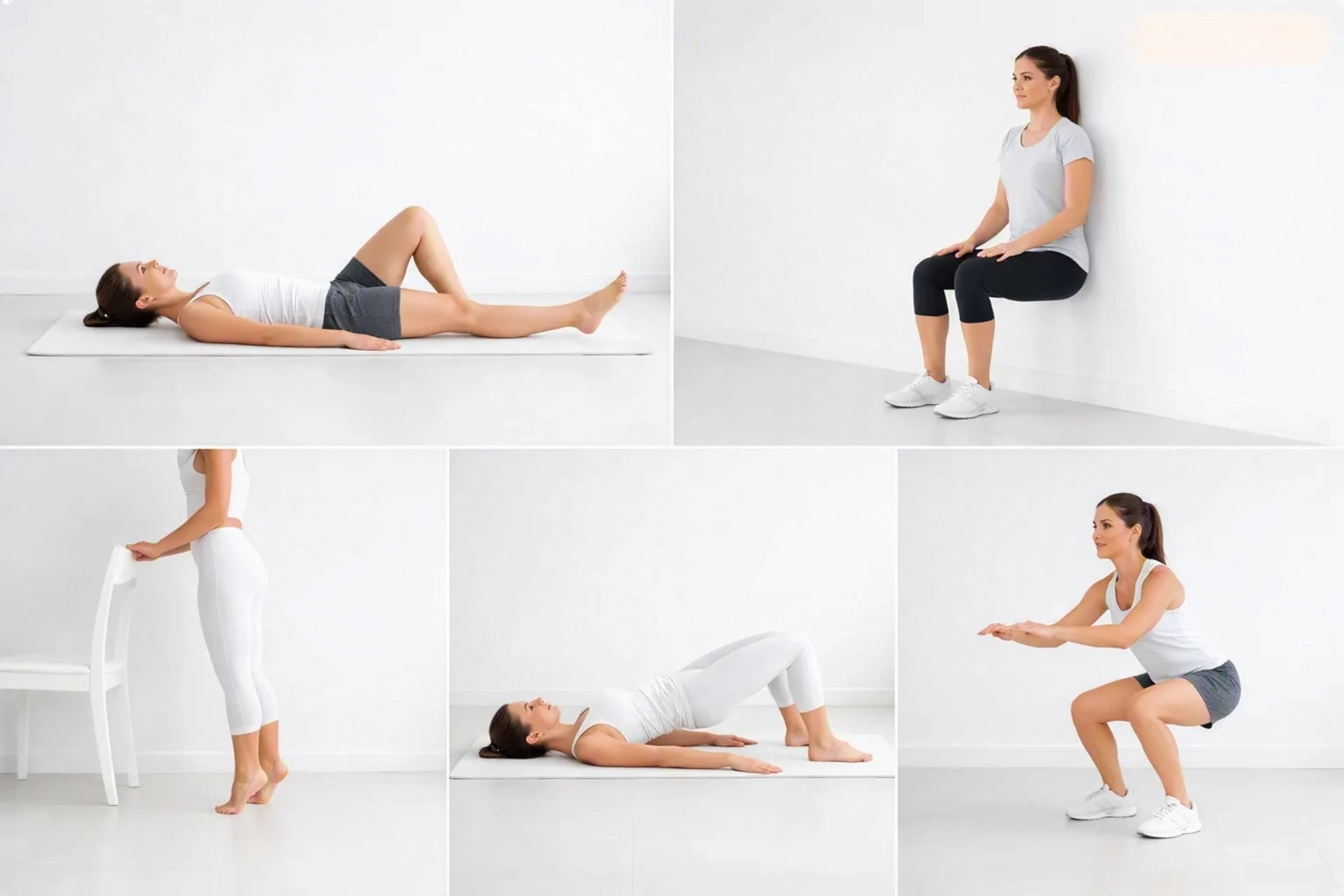
🦵 1. Straight‑Leg Raises (Knee Support)
This exercise strengthens the quadriceps — the main stabilizing muscle for your knees.
How to do it:
- Lie on your back with one leg bent and one leg straight.
- Tighten the thigh of the straight leg.
- Lift it slowly to the height of the bent knee.
- Lower with control.
Reps: 10–12 per leg
Benefits: reduces knee strain, improves stability
🧍 2. Wall Sits (Knee + Hip Support)
Wall sits strengthen the quads, glutes, and hips — all essential for joint stability.
How to do it:
- Stand with your back against a wall.
- Slide down until your knees are slightly bent.
- Hold the position while keeping your core tight.
Hold: 15–30 seconds
Benefits: improves endurance and joint alignment
🦶 3. Calf Raises (Ankle + Knee Support)
Strong calves help stabilize the ankle and reduce pressure on the knees.
How to do it:
- Stand with feet hip‑width apart.
- Lift your heels slowly.
- Lower with control.
Reps: 12–15
Benefits: improves balance and reduces ankle strain
🧘 4. Glute Bridges (Hip + Lower Back Support)
Weak glutes force your knees and hips to absorb extra stress. This exercise strengthens the entire posterior chain.
How to do it:
- Lie on your back with knees bent.
- Lift your hips until your body forms a straight line.
- Squeeze your glutes at the top.
- Lower slowly.
Reps: 10–15
Benefits: reduces knee pressure, improves hip stability
🦵 5. Mini Squats (Full Lower‑Body Support)
Mini squats are beginner‑friendly and help strengthen multiple joint‑supporting muscles.
How to do it:
- Stand with feet shoulder‑width apart.
- Bend your knees slightly (not a full squat).
- Keep your chest lifted and core engaged.
- Return to standing.
Reps: 10–12
Benefits: improves mobility and joint control
If you need more knee‑friendly movements, explore Best Exercise for Stiff Knees.
🦵 6. Step‑Ups (Knee + Hip Support)
Step‑ups mimic natural movement and strengthen stabilizing muscles.
How to do it:
- Step onto a low platform or sturdy step.
- Lift your body up using your front leg.
- Step down slowly.
Reps: 8–10 per leg
Benefits: improves balance and functional strength
🦶 7. Ankle Alphabet (Ankle Mobility + Strength)
This gentle exercise strengthens the ankle while improving mobility.
How to do it:
- Sit comfortably.
- Lift one foot off the ground.
- “Draw” the alphabet with your toes.
Benefits: reduces stiffness and improves ankle control
🧘 8. Clamshells (Hip + Knee Support)
Clamshells strengthen the gluteus medius — a key muscle for knee alignment.
How to do it:
- Lie on your side with knees bent.
- Keep feet together.
- Lift the top knee slowly.
- Lower with control.
Reps: 12–15 per side
Benefits: improves hip stability and reduces knee strain
🧠 Tips for Safe Joint‑Friendly Strength Training
- Move slowly and with control.
- Stop if you feel sharp pain.
- Keep your core engaged.
- Use a chair or wall for balance if needed.
- Start small — consistency matters more than intensity.
If inflammation affects your joints, explore Foods That Help Inflamed Joints for supportive nutrition.
🌼 Final Thoughts
Strength training doesn’t have to be intense to be effective. These beginner exercises help stabilize your joints, reduce pain, and improve mobility — all with simple movements you can do at home. /physical-well For more guidance on joint health, inflammation, and mobility, explore the Physical Wellness Pillar.
** For more information on How to Improve Joint Mobility Naturally”**
More information on Foods That Help Cartilage Repair.
Learn more about low-glycemic breakfast foods.
Medical Disclaimer: This article is for informational purposes only and is not a substitute for professional medical advice.